1. Cite some parallels that link Dada and Constructivism in Germany.
2. Is an expressionist idiom somehow more appropriate as a vehicle for dark feelings than for other sentiments? Why or why not?
3. Why was architecture so central to the Bauhaus in both a practical and theoretical sense?
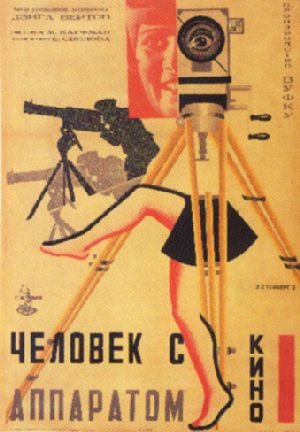
1. Dada and Constructivism were linked through the ideology of social change through art. Both groups though different in their aesthetics rejected classical aesthetics means to achieve a desired outcome. Germany came to harbor much of Russian Constructivist ideals and actual artists themselves. The main connection between the two was a lean towards the left: Communism. As well both groups were interested in a new technique which was to dominate the graphic design of the two schools of thought, photomontage. Photomontage is a process through which separate unrelated photos are collaged together to create a new image that is an amalgamation of other images. This appeals to the sensibilities of the two groups which sought to “engage with society.” They needed to convey the real world around them and the current state of affairs: cultural and political. Yet they both wanted a new, abstract, nuanced way to represent the things around them. A simpler, and mostly more geometric and absurd way.

Hannah Höch, Cut with the Kitchen Knife through the Beer-Belly of the Weimar Republic, 1919

The Man with the Movie Camera, 1929, Vladimir and Georgii Stenberg
2. I personally believe the expressionist idiom did a lot to convey the zeitgeist of post-war Germany. Though the criticism may seem true that it was “too romantic” or “overly subjective,” it does elicit ethos which geometry does not. If we compare the two images seen below there is a huge emotional impact in Kate Kollwitz’s work. The human figures have exaggerated dramatic expressions. The elongate figures are highly organic and expressive and there is a literal scene of death and loss. The monochromatic colors add to the melancholic atmosphere and sense of loss. In Grosz’s poster there is little to relate to. While it does a good job conveying information it is pragmatic in a sense and de-humanized. There is no way of knowing “dark feelings” because there are no expressions, nothing to sympathize with. This is why expressionism reigns supreme in the department of emotion and arguably in the idiom of expression of the German people and psyche, post-war.

Kate Kollwitz, Die Liebenden dem Toten (gedenkblatt für Karl Liebknecht) [The living and the dead [memorial for Karl Liebknecht], 1921

George Grosz - DADA-Bild
3. Architecture was incredibly central to the Bauhaus movement because it embodied their ideals. The cornerstone of Gropius’ intention in creating the movement was to combine the fine and applied arts. He felt that the only way to accurately combine “arts” and “crafts” was to synthesize them into an architecture. This idea of architecture too would help to propagate the ideas of a New Republic and a modern society. And in this modern society the places where progress would happen and society would be changed would be inside of these designed buildings: through architecture. Architecture under Gropius in the Bauhaus style soon moved to synthesize expressionism into its fabrication. This theoretical approach to a new society moved to include ideas from the Medieval era, a time before the suffer of the war and the disintegration of society.
Szépvölgyi road 88, 1933. Fischer József.a